‘Now or Never’ Folding in Poker
At the heart of game theory lies the concept of gradual range filtering. This means that as each street goes by and as more money goes into the pot, ranges slowly become narrower, or more filtered.
In our recent discussion about the Psychology of Folding, we looked at why our brains hate letting go of invested resources. Strategically, however, we must overcome this by understanding how these ranges filter in practice.
This happens in such a way that the aggressor (the player doing the betting) is not bluffing too much on each street, but is bluffing just enough to make life tricky for the defender. The defender is, in turn, slimming their own range down so that they are neither calling too often nor too rarely vs. any bet. This equilibrium is what we strive for, but as we discussed in our recent look at the Psychology of Folding, human emotion often disrupts this logical filtering process.
In game theory, each player neutralises the other’s exploitative chances by maintaining this balanced strategy. In reality, things are often very different – thankfully.
Entailed within the gradual range narrowing of game theory is the idea that for some hands, the correct action will be to fold immediately to aggression. For others, it will be to call once and then fold. For a third group, the right action might be to call the flop and turn and then eventually fold the river if need be. For a fourth group, calling down might be the only option.
Let’s explore two exploitative situations where you can choose right away whether to call none or all remaining streets, or to make a ‘now or never’ fold.
These spots occur against overly aggressive players who you know will fail to gradually filter their range on a street-by-street basis. In the modern tournament landscape, dominated by aggressive Progressive Knockout (PKO) and Mystery Bounty formats, these “unfiltered” ranges are more common than ever. Read on to find out a couple of situations where you’ll be faced with the decision whether to fold the flop, or to call the river.

Against the Pot-Sized Donk-Bet
As unsound as this play is, the pot-sized donk bet is a relatively common tool in the box of the aggressive recreational player. Like it or not, you shall encounter this action quite regularly.
Villain limps in the HJ and you look down at 8♣8♦ on the cutoff. You make a standard isolation raise against the aggressive limper, getting this player to yourself and in position. Everything goes to plan as the remaining three players fold and the limper predictably calls.
The flop comes Q♠9♠4♥ and out comes the dreaded donk-bet for full pot. You hate this spot – and for good reason. You can feel like folding even this weak pair is going to mean folding the best hand fairly often, and you’re right.
It is not out of character for such an opponent to lead gut-shot straight draws, flush draws, weak pairs and even total air. Their range is a blend of all kinds of things. The problem is that this board is often going to get a lot worse for your hand and you are very likely to face another pot-sized bet on the turn. When a dog starts barking at the postman, it is very unlikely to suddenly stop. This Villain is as mindlessly aggressive as the barking dog.
Given this prediction, the worst thing you could possibly do is call now and then fold later, but this is how many people handle the spot. They are too confused to find a real solution so they’ll settle for some sort of perceived compromise: ‘I’ll call one bet, not two’. This is a classic “sunk cost fallacy” trap – you are essentially donating your flop investment to a player who has no intention of slowing down. This is playing into the hands of the mindless aggressor. Losing your flop investment is practically a forgone conclusion.
The way you should handle this spot is to call all the way down with made hands above a certain strength, and fold everything else.
With draws you can call and try to get there in order to reap the implied odds of Villain’s aggression, or even raise if they have a lot of equity. Standard play dictates folding any pair weaker than a 9 right now, while continuing to showdown on reasonable runouts with 9x and better.
This is high variance, but it’s very accurate poker against this machine gun of an opponent.
Pro Tip
When you know they are likely to keep firing, avoid calling any hand that will often have to fold later on.
You fold now, or never, negating the impact of turn and river bluffs against your flop calling range.
If they have a value hand, they will win a good bit of money from your marginal hands. But as you know, it’s much easier to flop nothing than something, so all you need is a hand that can make it to showdown. The 9x is also a much better call than the 88 due to it having 5 outs instead of two when behind a Qx hand. In today’s tougher games, where edges are thinner, these marginal stack-preservation decisions are what keep your ROI positive during high-variance sessions.
With Shallow SPR
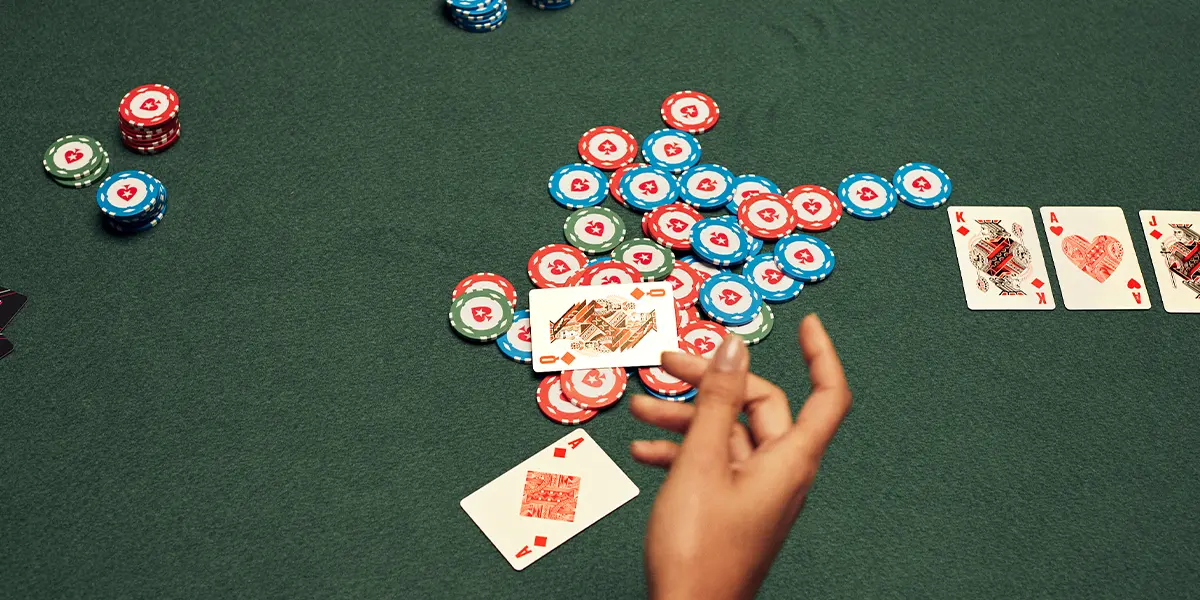
When the stack to pot ratio (SPR) is shallow, meaning little money remains in the effective stack in relation to the pot, you are incentivised to decide sooner rather than later whether you wish to stack off. Let’s take an example.
You flat a 3-Bet with 10♠10♦ on the button against a weaker player in the big blind. On the flop of 5♠5♥3♣ the pot is 20.5BB and you have an effective stack of 90BB. Villain bets half of the pot and you call. The turn brings the 3♠ and this time Villain bets 32BB into the 40.5BB pot. What is going on?
This is where forward planning is completely essential. The amateur might call and ‘figure it out on the river’, but the opponent is not going to be balancing their range and giving up with just the right amount of bluffs to mimic game theory optimal play.
In reality, this player has decided to bomb lots of his money into this pot and, on the river, it is highly unlikely that they will choose not to invest the last 48BB into a pot that will be 104.5BB. In today’s modern poker game, a turn bet of this size in a shallow SPR spot is almost always a commitment to the river. Therefore, you must decide whether to make a ‘now or never’ fold.
The question is whether Villain is capable of spewing with Ax or even a total bluff here and how much they are likely to 3-Bet worse pairs like 66-99 and then over-value them now. You should imagine that instead of calling 32BB into 40.5BB, that you are calling off your remaining stack of 80BB to win Villain’s bet, the pot, and Villain’s remaining chips too.
Your required equity to call turn and river then will be:
80 / 200.5 = 40%
It would be a big mistake to claim that only 31% equity was required (32 / 104.5) and then end up folding the river. This would be a big waste of 32BB.
Remember: every chip you save by folding early against a nutted range has the same value as a chip won through a successful hero call.
Conclusion
Take notice of the effective stack and whether you could afford to lose it with your holding. Take notice of player types and whether you can weather their aggression through to showdown. If you find yourself struggling with the emotional side of these big folds, revisit our guide on the “Psychology of Folding” to better understand big pot attachment.
There are many more spots like this where calling once will be worse than the all-or-nothing approach, look out for them.


View Other Blogs